
Hanging curtains, properly
Split the space above the window into thirds and hang from the top third. Go about ten inches wider than the glass on each side. Both rules exist to make the window look bigger than it is, and both are free.
Curtain rod placement, the top-third rule and the 10-inch overhang
Measure a real window's headroom and place the rod by the rule
A lot of people hang curtains in the same place: a couple of inches above the window, and just wide enough to cover the glass.
It seems obviously correct. The curtains are for the window, so put them on the window.
And it tends to make the window look small, the ceiling look low, and the room look cheap, all three, from one decision that took ten minutes and could have gone the other way for free.
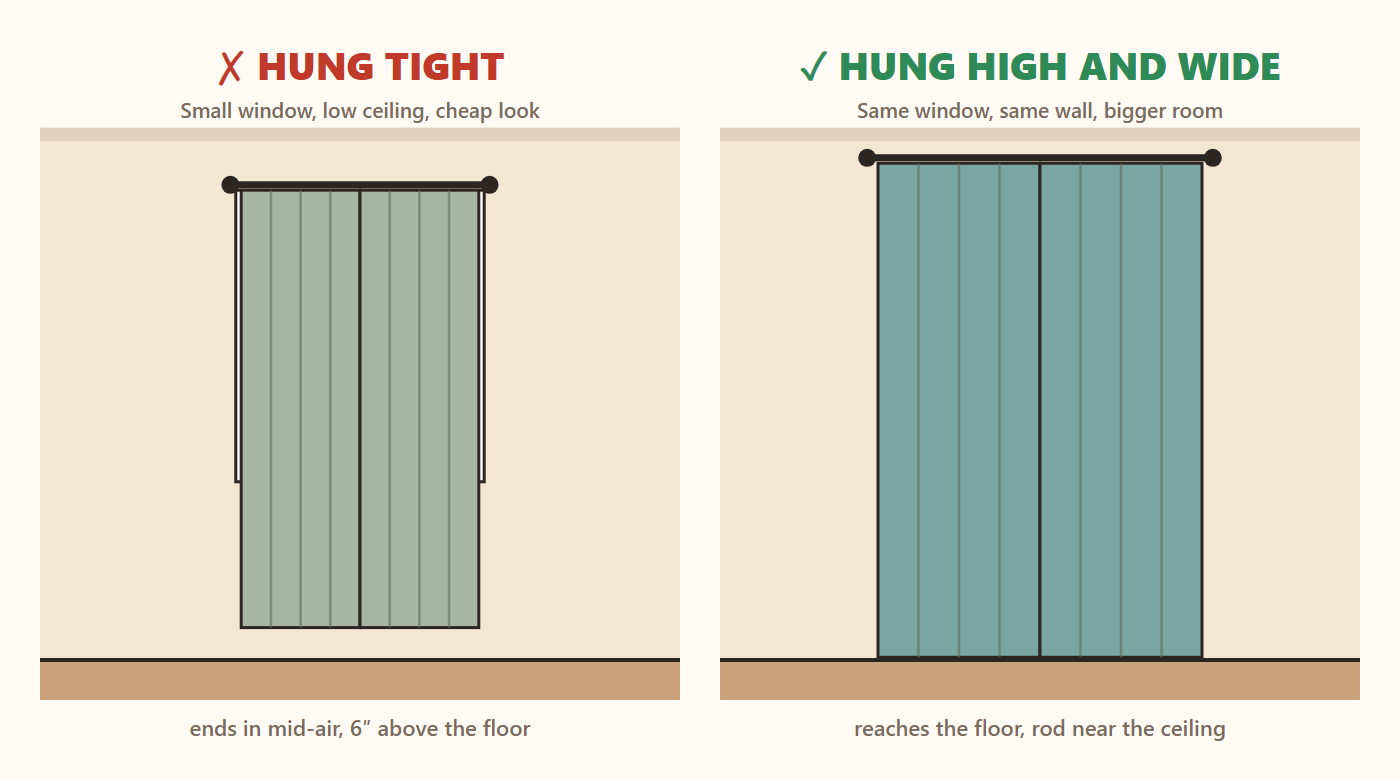
Curtains are drawing a bigger window
Here's the reframe. Curtains aren't covering the window. They're drawing one.
Your eye reads the curtained area as "the window", the whole shape, fabric included. So the shape you hang is the window the room appears to have. Hang tight to the glass and you draw a small window. Hang high and wide and you draw a big one.
Two rules do the work.
Rule one: split the space above into thirds
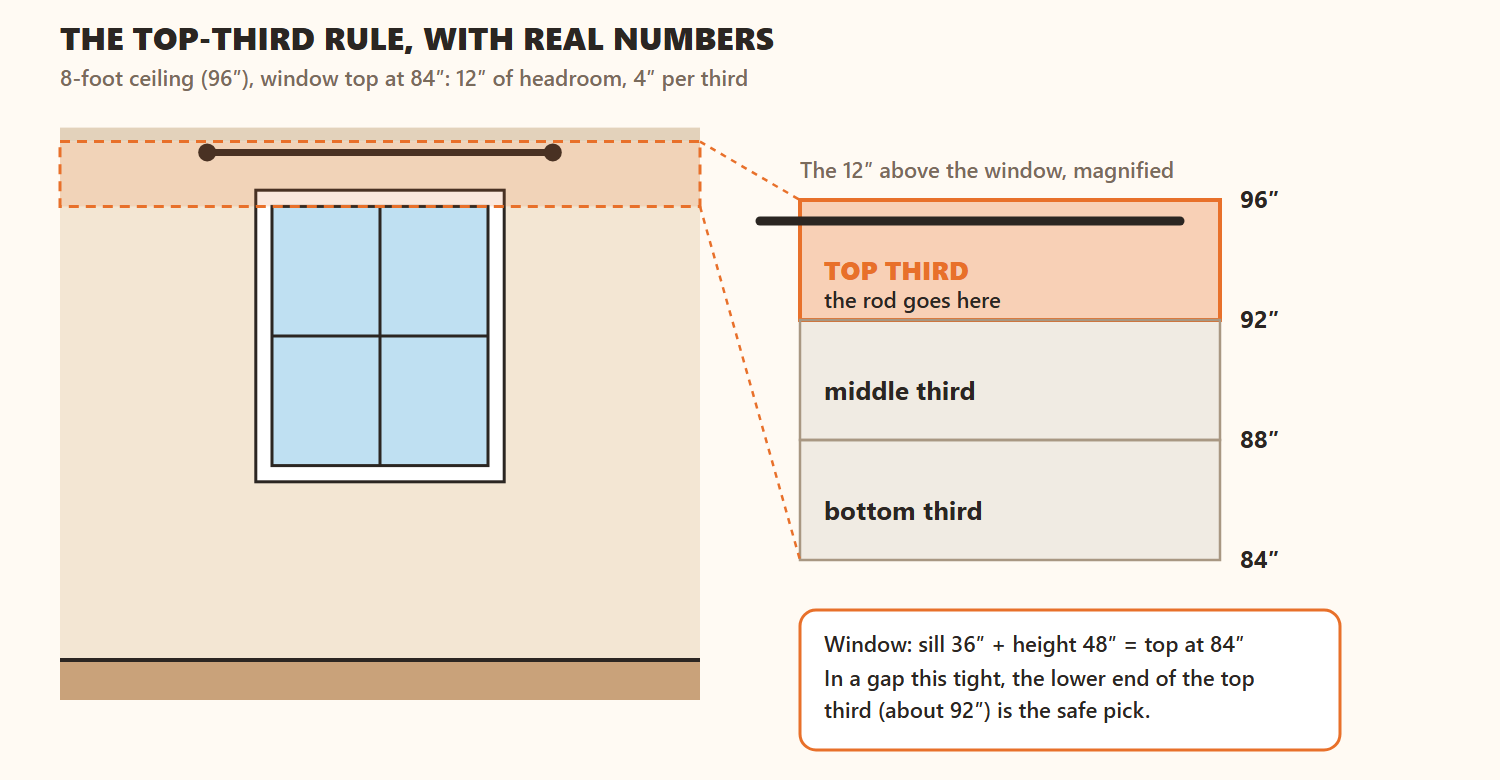
Measure from the top of the window frame to the ceiling. Divide that gap into three.
A good rule of thumb: hang the rod in the top third of the space between the window and the ceiling, and go about 10 inches wider than the glass on each side.
Why not right at the ceiling? Because a rod jammed against the ceiling looks like a mistake, and there's nowhere for the rings and the fabric to gather. The top third gives you height and still looks deliberate.
Worked example, using real numbers. Plenty of houses have 8-foot ceilings: 96 inches. Put in a window 48 inches tall with its sill at 36 (the app's Single Window is exactly that), and the top of the window sits at 84 inches, which leaves 12 inches between the window head and the ceiling.
Split 12 into thirds: 4 inches each. The bands are 84–88, 88–92 and 92–96, so the top third is 92 to 96. The rod goes about 8 to 12 inches above the window frame, and in a gap that tight, the lower end of that band is the safe answer.
Now try a room with a 10-foot ceiling and the same window. Suddenly there's 36 inches of gap, the top third is a much bigger band, and the rod goes well above the frame with real air between rod and window. Same window, completely different answer, which is why the rule is a fraction and not a number.
Rule two: go wider than the glass
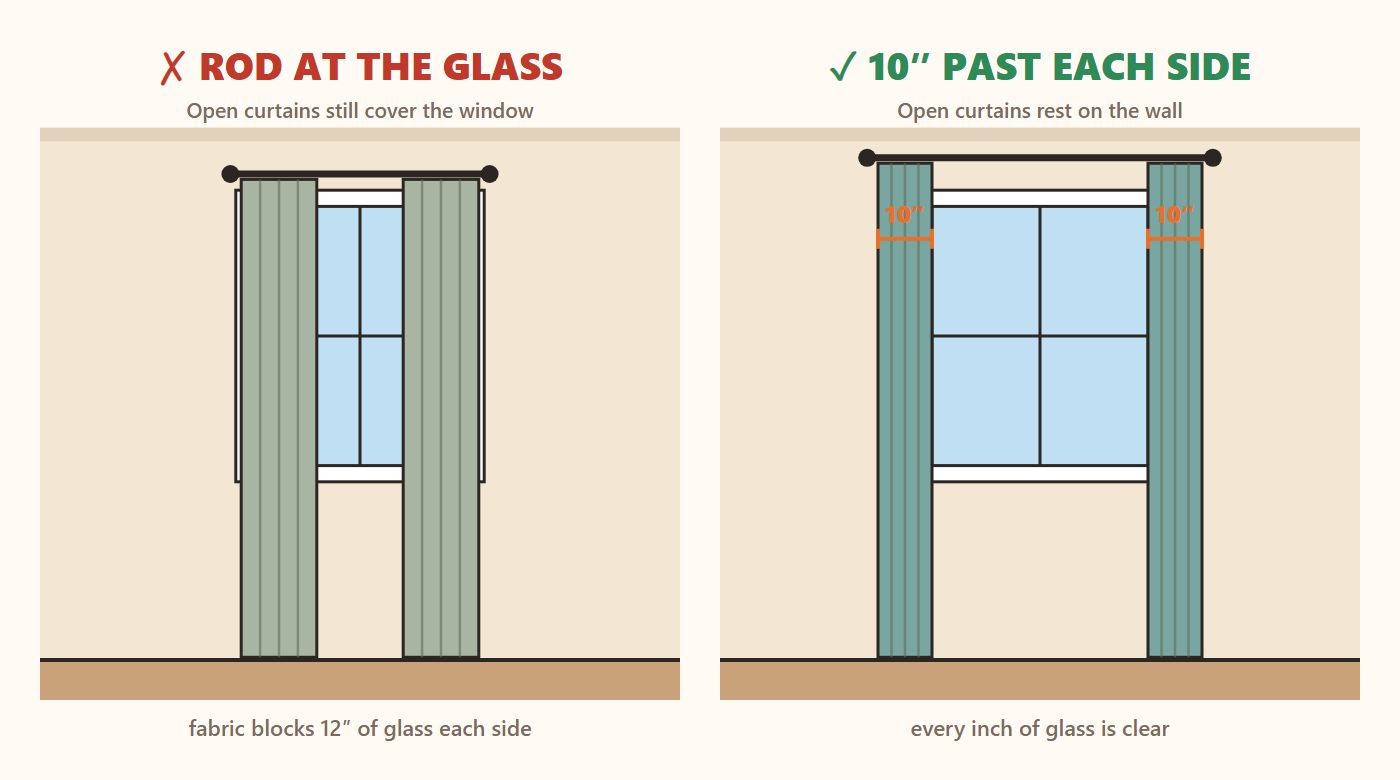
Extend the rod about 10 inches past the window on each side, anywhere from 8 to 12 is normal.
This one has a practical reason and a visual one, and the practical one comes first: when the curtains are open, they should sit on the wall, not on the glass. Fabric stacked over the window blocks light in the daytime, which is the exact opposite of what a window is for.
The visual reason is the same as rule one. The curtained shape reads as the window, so a wider rod draws a wider window.
Rule three, briefly: the bottom
Curtains should reach the floor. Just touching it, or a half inch above so they don't drag.
The common failure (ending halfway down the wall, or worse, an inch or two above the floor) can read as wrong even to people who couldn't say why. It's the same effect as pants that are slightly too short.
Why all three rules point the same way
Notice what they have in common. Every one of them makes the curtained shape bigger than the window. Higher, wider, longer.
That's the whole idea, and it's why this is a design lesson rather than a housekeeping tip: you are using cheap fabric to change the apparent proportions of a room. Two rooms with identical windows can feel completely different depending on where somebody put four screws.
Take it into the Designer.
Next, follow along in the Designer, step by step.
Build it → 7 steps in the DesignerDo it in the app
Follow along in the Designer, one step at a time
Open Tiny Architects Designer. One honest note: there's no curtain tool, but the app has exactly the numbers you need to place the rod, which is the part people get wrong.
Draw a bedroom and put a window in itWalls › Outside › House OutlineWindows › Single Window👆 Show me
About 11 by 12, then click a Single Window onto one of the walls.
Find the two numbers that decide everything
Click the window. In the bar at the bottom you'll find Tall (window height) and Off the floor (sill height), both adjustable in 6-inch steps.
Out of the box: sill 36 inches, window 48 tall. Add them: the top of the window is at 84.
Now find the headroom
New walls in the app are 10 feet floor to floor, but the floor itself takes 8 inches of that, so the room is 112 inches (9 feet 4) from floor to ceiling. 112 − 84 = 28 inches above the window. That's a lot more than the 8-foot room in the worked example.
Do the thirds
28 ÷ 3 is a bit over 9, so the top third runs from about 103 to 112 inches off the floor. That's where the rod goes, roughly 19 to 28 inches above the window frame, with plenty of air between rod and window.
Change the window and watch the answer change
Tap H up twice, to make the window 60 inches tall. Now the window top is at 96, the headroom is only 16 inches, and the top third runs from about 107 to 112. Same room, same rule, a much tighter answer.
That's the lesson in one move. You didn't change the curtains. You changed the window, and the curtain rule gave you a different answer.
Do the width tooMeasure › Custom Measure
The window is 40 inches wide. Add 10 inches each side: the rod is 60 inches long. Use on the wall to check there is actually 60 inches of wall available, next to a corner, there often isn't, and that's a real constraint people discover with a drill in their hand.
Flip to 3D and look at the wallPlan → 3D👆 Show me
Look at the window in the wall and picture the rod near the ceiling and the fabric running all the way to the floor. Then picture it hugging the frame. The second one is what a lot of rooms have.
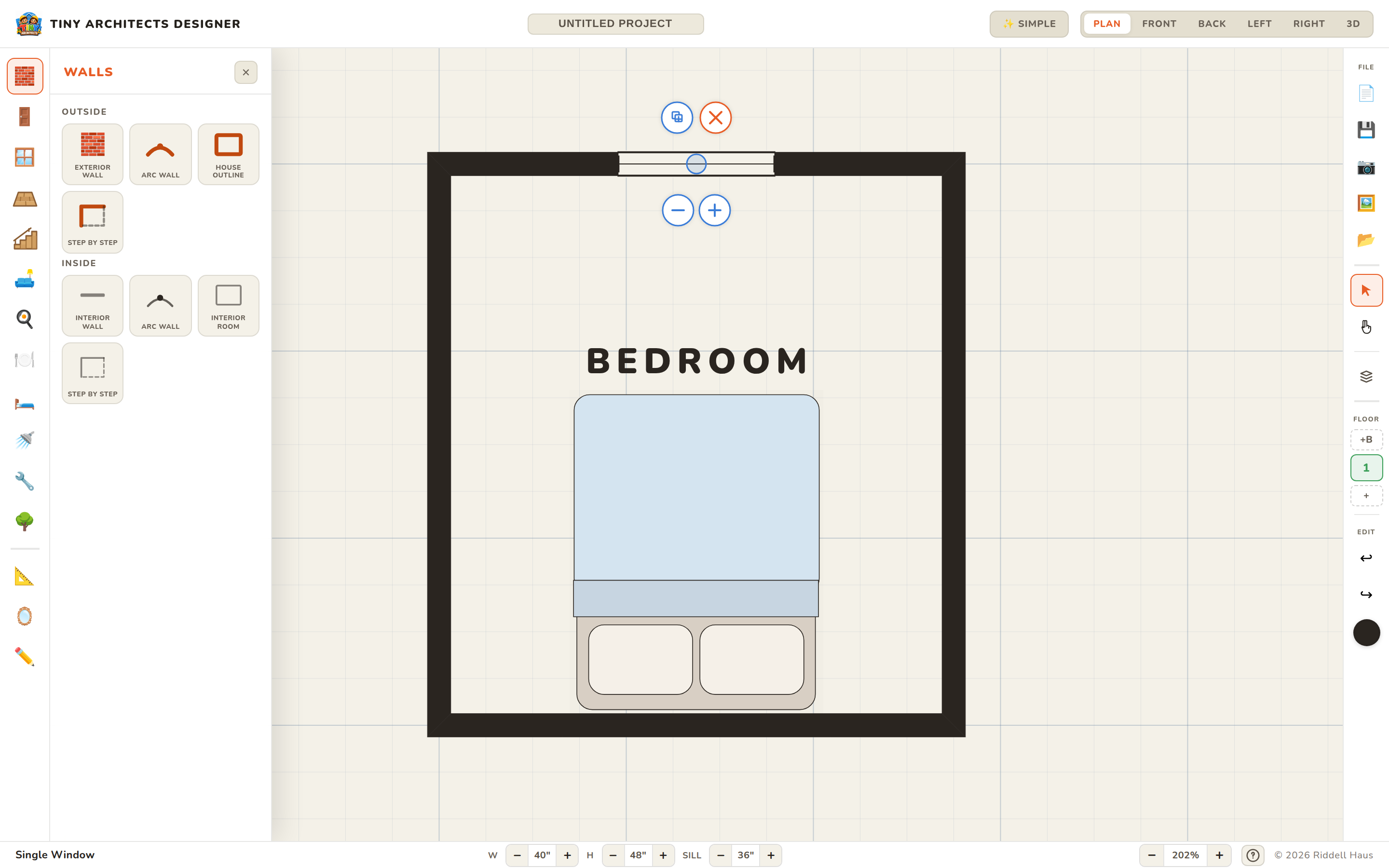
Click the window and the numbers are in the bottom bar.
Now make one of your own.
Measure a real window's headroom and place the rod by the rule
Your turn →Your turn
Now make your own, using what you just learned
Measure a real window and work out where the rod should be.
Many will be hung low and narrow. Measure by how much, an inch, or eight?
Then look at the room and try to see it the other way: the window as the curtains draw it, not as the glass. Once you can see that, you'll start noticing it in rooms you walk into and photos of rooms you scroll past.